Best Komodo Snorkeling Spots 2026: Your Underwater
Komodo National Park, a UNESCO World Heritage Site since 1991, offers snorkeling experiences in 2026. Located within the Coral Triangle, this protected marine area hosts over 1,000 fish species and 260 coral species. Global search interest for “komodo snorkeling” tours from Labuan Bajo remains high, with 1,000–1,300 monthly searches, indicating strong traveler demand. Visitors primarily from Western Europe, Australia, and North America seek its vibrant underwater ecosystems. Komodo’s clear waters and diverse marine life position it as a premier global snorkeling destination.
Manta Point & Taka Makassar: Encountering Giants
Manta Point, also known as Manta Alley, stands as Komodo’s premier location for manta ray snorkeling. Between June and October, individual manta rays, often reaching wingspans of 3-5 meters, gather here for feeding and cleaning. Water temperatures average 26-28°C during these months, offering comfortable conditions for extended snorkeling sessions. Operators report a 70-90% success rate for manta sightings during peak season, drawing 700-900 monthly searches for “manta ray snorkeling komodo.”
Adjacent to Manta Point lies Taka Makassar, a unique crescent-shaped sandbar visible only at low tide. This shallow, sandy islet provides a safe, current-free area for new snorkelers and families. Its surrounding waters, typically 3-5 meters deep, feature scattered coral patches and smaller reef fish. Many day tours combine Manta Point’s excitement with Taka Makassar’s tranquil beauty, often spending 45-60 minutes at each location.
Pink Beach (Pantai Merah): A Geological Wonder
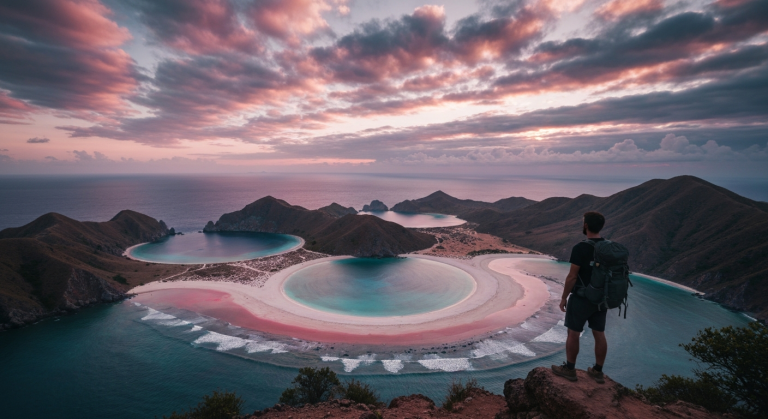
Pink Beach, locally known as Pantai Merah, derives its distinctive hue from microscopic organisms called Foraminifera. These red-pigmented organisms, living on coral reefs, mix with white sand to create the vibrant pink color. This unique geological feature attracts 600-800 monthly searches for “pink beach komodo snorkeling” queries. Snorkeling here reveals diverse soft corals and small reef fish in waters 2-8 meters deep.
Visibility at Pink Beach typically ranges from 10-20 meters, depending on tidal conditions. Most day trips allocate 60-90 minutes for both beach exploration and snorkeling. Combining a visit here with a trek to see the Komodo dragons on Komodo Island offers a popular dual-attraction itinerary, often included in standard Komodo snorkeling day trip prices. The calm bay provides a sheltered environment, suitable for all experience levels.
Siaba Besar & Kanawa Island: Beginner & Family Favorites
Siaba Besar is widely regarded as one of the best Komodo snorkeling spots for beginners due to its consistently calm and shallow waters. The bay is protected from strong currents, making it ideal for young children and those new to snorkeling. Water depths typically range from 2-7 meters, revealing extensive coral gardens and frequent sightings of green sea turtles and reef sharks. Tour operators prioritize Siaba Besar for family friendly Komodo snorkeling trips, often spending 60-75 minutes there.
Kanawa Island, located just outside the main Komodo National Park boundaries, offers another excellent, accessible snorkeling experience. Its house reef, easily reachable from the beach, boasts vibrant soft corals and a variety of clownfish, parrotfish, and angelfish. The island also features a small resort and restaurant, providing amenities for longer stays. Many multi-day Komodo snorkeling tours include Kanawa as a relaxing final stop.
Understanding Currents and Safety Protocols
Komodo National Park’s waters are known for strong, unpredictable currents, especially in channels between islands. These currents, driven by tidal flows between the Indian and Pacific Oceans, can reach speeds of 5-8 knots in certain areas. Queries like “is komodo safe for snorkeling currents” receive 200-300 monthly searches, highlighting traveler concern. Reputable tour operators mitigate risks through several key safety protocols. They employ experienced guides with local knowledge, often a 1:8 or 1:10 guide-to-guest ratio, who assess conditions before entering the water.
Safety briefings are mandatory before each snorkel session, covering entry/exit procedures and current awareness. Boats are equipped with essential safety gear, including life jackets, emergency oxygen, and two-way radios. For stronger current spots, drift snorkeling is common, where the boat follows the group. Visitors should always choose operators with strong safety records and positive reviews, particularly those mentioning “felt safe” or “good briefing,” for a secure experience. The Indonesian Ministry of Tourism also emphasizes safety standards for marine activities across the archipelago, as detailed on indonesia.travel.
Planning Your 2026 Komodo Snorkeling Trip
Optimizing your Komodo snorkeling trip requires understanding seasonal variations and tour options. The dry season, from April to November, offers the best visibility and calmest waters, with peak manta ray sightings between June and October. Water temperatures range from 25-29°C throughout the year, but southern sites can be cooler (22-25°C) from July to September. Booking in advance, especially for multi-day trips, is recommended during these periods.
Consider your budget and group size when selecting a tour. Mid-range small-group day trips, priced at USD 80-150 per person, are popular for their balance of quality and cost. For ultimate flexibility, a private Komodo snorkeling charter starts from USD 500-900 per boat per day. Many travelers combine snorkeling with a 4-day Labuan Bajo itinerary, incorporating land excursions like Padar Island viewpoints.
Key Considerations for Your Komodo Snorkeling Adventure:
- **Tour Type:** Choose between shared day trips (~USD 80-150/person for small groups), multi-day liveaboards (~USD 250-450/person for 2D1N-3D2N), or private charters (~USD 500-1,500+/day).
- **Seasonality:** June to October offers peak manta ray sightings and excellent visibility in northern sites. December to February can bring stronger winds but good visibility in protected areas.
- **Safety Gear:** Ensure your operator provides well-maintained masks, snorkels, fins, and life jackets. Some premium tours include wetsuits for comfort and sun protection.
- **Guide Expertise:** Opt for tours with certified, English-speaking guides experienced with Komodo’s currents and marine life. A good guide-to-guest ratio enhances safety and experience.
- **Itinerary Balance:** Verify if the tour includes both snorkeling hotspots (Manta Point, Pink Beach, Siaba) and land attractions (Komodo/Rinca dragon trek, Padar Island viewpoint).
- **Inclusions/Exclusions:** Clarify what is covered (meals, drinks, equipment, park fees). National Park entrance fees for foreigners are typically USD 10-25 per day, depending on the day and type of visit.
- **Booking & Communication:** Look for clear online booking platforms, instant confirmation, and responsive WhatsApp communication for pre-trip inquiries.
- **Reviews & Social Proof:** Check recent Google Maps and TripAdvisor reviews (aim for 4.7+ average) to gauge operator reliability and service quality.
Komodo National Park remains an exceptional destination for snorkelers in 2026, offering diverse marine encounters from majestic manta rays to vibrant coral gardens. Careful planning ensures a safe and memorable experience. Whether you seek thrilling drifts or calm, family-friendly waters, Komodo delivers. Explore our range of Komodo snorkeling tours and secure your underwater adventure today.